
If you’re a runner who wants to build endurance, get faster, and feel stronger across longer distances, you’ve probably heard the advice a hundred times: “Run easy on easy days.”
But here’s the truth most runners don’t realize:
An easy run can absolutely work against you… if you’re doing it wrong.
Don’t worry, your easy runs aren’t automatically a waste of time. In fact, they might be one of the most powerful tools you have. But many runners unintentionally ruin the benefits by drifting into the gray zone, ignoring effort cues, or treating an easy day like a half-hearted workout.
Let’s break down why the easy run matters, what runners get wrong, and how to ensure your easy miles are actually moving you toward your performance goals.
Why Easy Runs Matter More Than You Think
Most runners equate progress with speed, or faster intervals, faster tempo runs, faster long runs. But the foundation for all of that speed is your aerobic base.
Easy runs:
- Build endurance for longer distances
- Improve your body’s ability to use oxygen efficiently
- Strengthen the heart and lungs
- Increase capillary density and mitochondrial development
- Support recovery so your hard workouts actually work
In other words, easy runs make the hard runs possible. When done correctly, they build a bigger engine. One that can sustain stronger training and faster racing.
What Runners Get Wrong (That Sabotages Their Easy Runs)
1. Running Too Fast Without Realizing It
This is the #1 mistake. You head out for an “easy” run that… isn’t easy. Maybe you’re trying to match yesterday’s pace. Maybe you feel good and drift faster.
But once your pace creeps into moderate effort, the benefits drop fast.
- You’re no longer building your aerobic base efficiently
- Your recovery is compromised
- Your hard workouts start to suffer
This is the infamous gray zone: too fast to be easy, too slow to be quality work.
2. Letting Ego Pick the Pace
This shows up as:
- Not wanting to run “slow”
- Comparing to faster friends or past runs
- Trying to impress your watch or social stats
Your body doesn’t care about your pace number. It only cares about the effort.
3. Treating Every Easy Run the Same
Some days need very easy miles. Other days can be steadier. Weather, fatigue, terrain, stress — all of it changes what “easy” means.
4. Ignoring Effort or Heart Rate Cues
Even if you don’t train by heart rate, you should understand easy effort:
- You should be able to hold a conversation
- Breathing should be controlled
- Legs should not feel heavy or tight
- You should finish feeling better than you started
How to Get the Most Out of Your Easy Runs
1. Slow Down — Even More Than You Think
Most runners’ true easy pace is 60–150 seconds per mile slower than 5K pace. Sometimes more. If you feel like you’re going too slow, you’re probably doing it right.
2. Use Effort as Your Guide
Forget the watch for a bit. Ask yourself:
- Can I talk comfortably?
- Does this feel sustainable for a long time?
- Is my breathing relaxed?
3. Adjust for Terrain, Weather, and Fatigue
Easy pace is not fixed. Hot days, hills, lack of sleep — all require slowing down.
4. Keep Long Runs Truly Easy
A long run that’s too fast is one of the quickest ways to sabotage a training cycle.
5. Add Strides to Stay Sharp
If you worry slow miles will dull your speed, add 4–6 strides at the end of one or two easy runs per week. They keep coordination sharp without adding stress.
6. Follow the Rule: Hard Days Hard, Easy Days Easy
Your easy days enable your quality workouts. If your easy run is too hard, your next hard workout won’t be as strong — which means you lose the gains you were chasing by running fast.
The Bottom Line
Your easy run is not a waste of time. But an easy run done too fast — or without intention — can hold you back.
Master true easy running and you’ll see:
- Improved endurance
- Faster race times
- Better aerobic development
- Lower injury risk
- More consistent, sustainable training
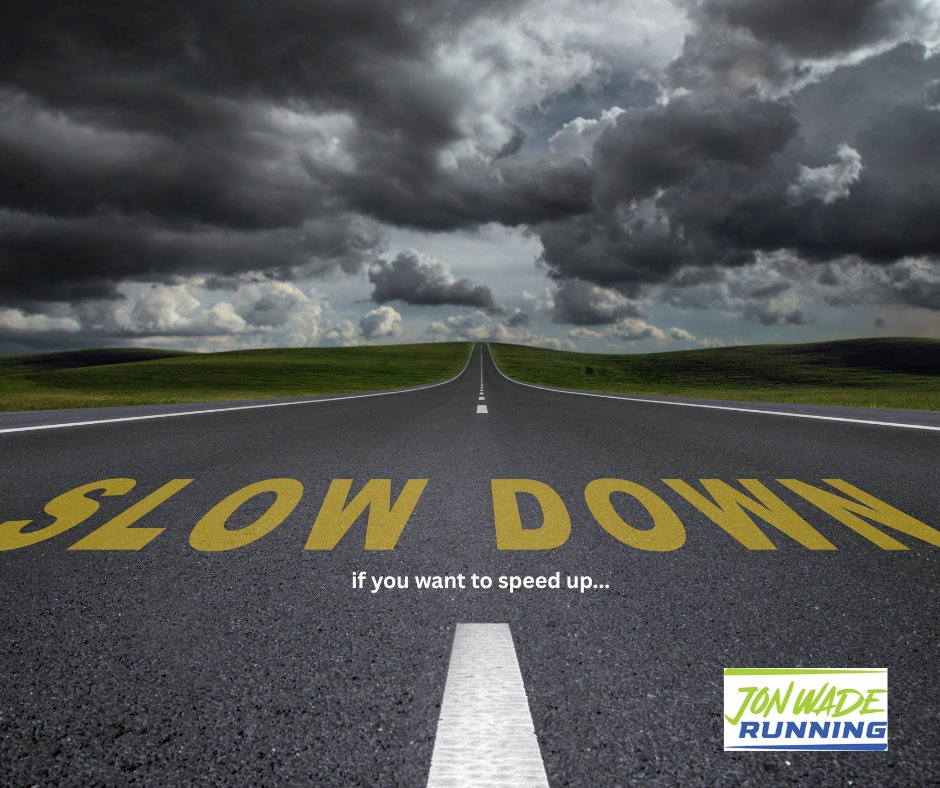
Slow down now so you can speed up later. Your future self — and future race times — will thank you.