Understanding your heart rate zones can help you become a stronger, faster, and more efficient runner. Whether you’re training for your first 5K or working toward a marathon PR, knowing when to push the pace and when to slow down is an important part of effective training.
The good news? Heart rate training doesn’t have to be complicated.
Let’s break down the five heart rate zones, what they mean, and how you can use them to improve your running.
What Are Heart Rate Zones?
Heart rate zones are ranges of exercise intensity based on a percentage of your maximum heart rate (HR max). Each zone represents a different level of effort and serves a different purpose in your training.
Training across different zones helps develop endurance, speed, aerobic fitness, and recovery.
Most runners benefit from spending the majority of their training time at easier intensities, with harder workouts strategically incorporated throughout the week.
The 5 Heart Rate Zones Explained
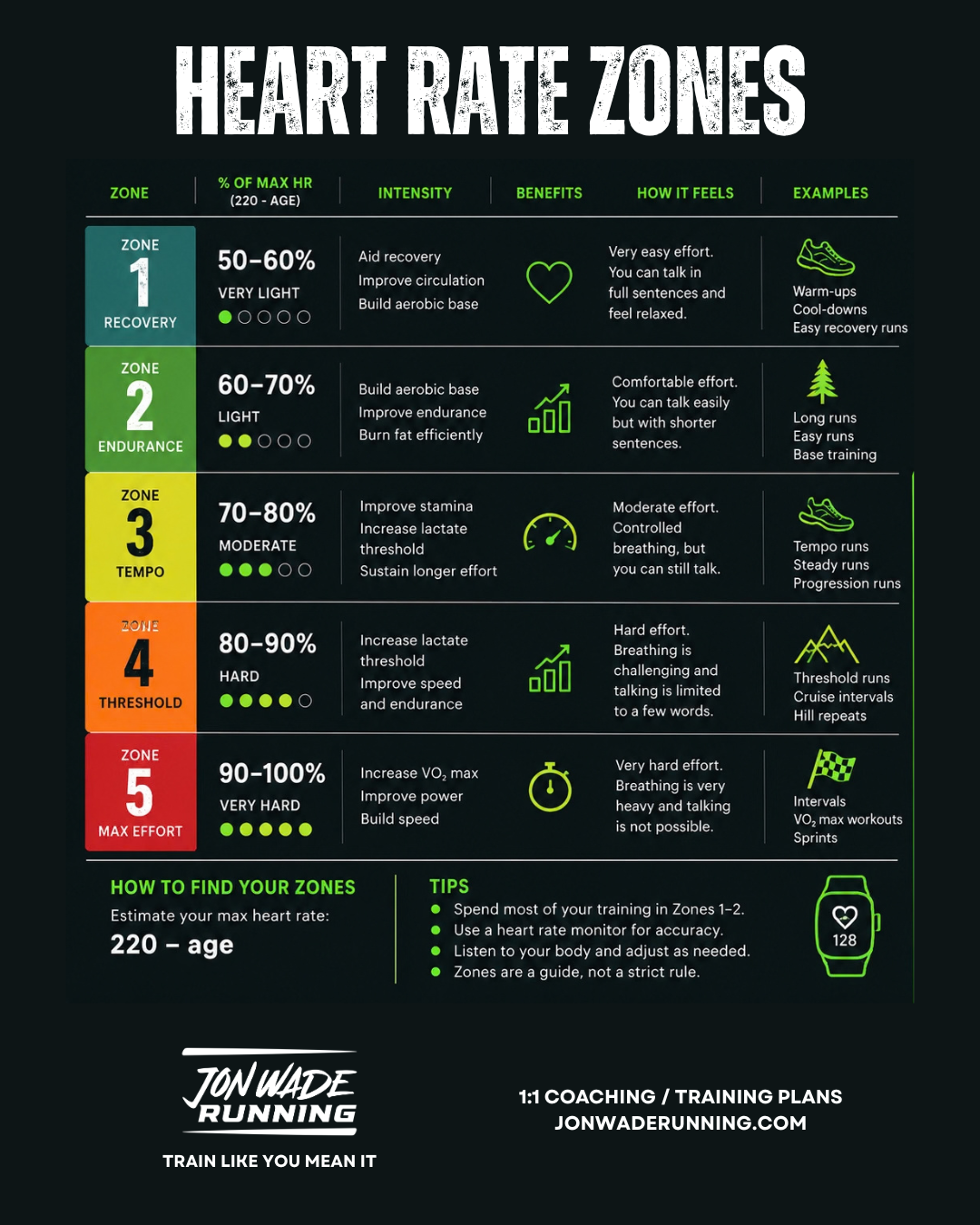
Zone 1: Recovery (50–60% of Max HR)
This is your easiest effort. Running in Zone 1 promotes recovery, improves circulation, and allows you to stay active without adding significant training stress.
Best for: Recovery runs, warm-ups, and cool-downs.
Zone 2: Endurance (60–70% of Max HR)
Zone 2 is where much of your aerobic development happens. These comfortable, conversational efforts help improve endurance and your body’s ability to use oxygen efficiently.
Best for: Easy runs, long runs, and aerobic base training.
Zone 3: Moderate (70–80% of Max HR)
This zone represents a moderate effort. Your breathing becomes more noticeable, but you should still feel in control. Zone 3 can help improve stamina and your ability to sustain faster running.
Best for: Steady runs, moderate progression runs, and controlled aerobic workouts.
Zone 4: Threshold (80–90% of Max HR)
Zone 4 is where running starts to feel challenging. Training near your lactate threshold helps improve your ability to maintain faster paces before fatigue builds.
Best for: Threshold workouts, tempo intervals, and sustained hard efforts.
Zone 5: Maximum Effort (90–100% of Max HR)
This is your highest-intensity training zone. Efforts are very challenging and generally sustainable for only short periods. Training at these intensities can improve VO₂ max, aerobic power, and speed.
Best for: VO₂ max intervals and short, hard repetitions.
How to Calculate Your Heart Rate Zones
A common way to estimate your maximum heart rate is:
220 − Your Age = Estimated Maximum Heart Rate
For example, a 40-year-old runner would have an estimated maximum heart rate of:
220 − 40 = 180 beats per minute (BPM)
Using that estimate, their heart rate zones would look like this:
| Zone | Heart Rate Range |
|---|---|
| Zone 1 | 90–108 BPM |
| Zone 2 | 108–126 BPM |
| Zone 3 | 126–144 BPM |
| Zone 4 | 144–162 BPM |
| Zone 5 | 162–180 BPM |
Important: This formula is only a rough estimate. Actual maximum heart rate varies significantly between individuals. More personalized methods, including field testing and threshold-based calculations, can provide more useful training zones.
Your perceived effort and ability to hold a conversation are also valuable tools for determining intensity.
Why Easy Runs Matter So Much
One of the biggest mistakes runners make is running too hard on days that should be easy.
Not every run needs to leave you exhausted.
Easy running helps build your aerobic foundation, supports recovery, and allows you to handle harder workouts more effectively.
By keeping easy days easy, you’ll be better prepared to make your hard days count.
Train Smarter, Not Just Harder
Heart rate zones are a useful tool, but they aren’t strict rules. Heat, hills, fatigue, hydration, and other factors can influence your heart rate on any given day.
Use your heart rate alongside pace and perceived effort to get a more complete picture of your training.
Want to take the guesswork out of your running?
At Jon Wade Running, I offer personalized 1:1 run coaching and training plans designed around your experience, fitness, and goals.
Whether you’re preparing for your first race or chasing a new personal best, I can help you train with purpose and make every workout count.
Train Like You Mean It.